

Overview
Oh, here we go. Another tired article comparing P/E ratios of dot-com-era companies with today’s AI companies. Yawn.
Not so fast.
We’ve all heard about how the leading AI companies trade at far lower earnings multiples than their dot-com counterparts. But for me, there’s a more interesting lens through which to examine these two booms.
In this article, I trace the historical, economic and technological developments that shaped the dot-com and AI booms, exploring some of the lesser-known similarities between them, as well as the differences. Then I look ahead to suss out where the value might accrue in the future.
1. The portal to a new technology
Dot-com era
Let me take you back to early 1993, when only 0.18% of the world’s population were online.
Later that year came Mosaic, a user-friendly browser that displayed pictures alongside text, suddenly making the Web accessible to consumers worldwide.
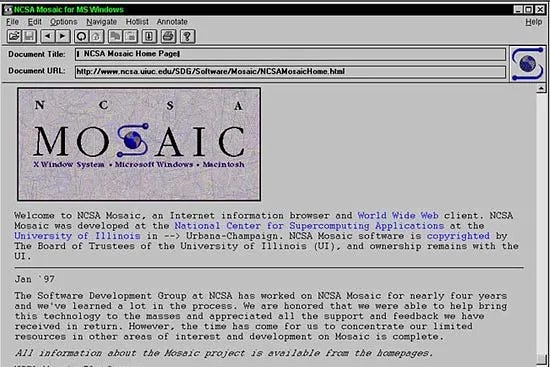
After Mosaic launched, the Web took off rather rapidly. In 1993, there were roughly 10 million internet users worldwide. By 1994, that number had doubled to around 20 million.
AI era
Fast forward to 2022. AI had been developing for years, but for most people it was something they had only heard about rather than used.
In November that year, OpenAI launched ChatGPT, allowing anyone to interact with a language model through a simple interface.

Within a year, it had attracted 100 million weekly active users.
2. Entrepreneurs dive in, companies emerge
Dot-com era
In 1994, it was becoming clear that the internet would fundamentally change business. For the first time, anyone with a computer, an internet connection and some technical chops could start an online business. This triggered a wave of entrepreneurship unlike anything the US had seen since before the Great Depression.
Amazon was founded in 1994, initially as an online bookstore. Yahoo also emerged in 1994, helping people navigate the expanding Web, followed by eBay in 1995, which allowed people to buy and sell goods online.


But it’s easy to forget the other, lesser-known companies that seemed just as revolutionary at the time. Companies like theglobe.com promised to transform how people interacted online, while Priceline.com set out to reinvent how consumers booked travel. These were innovative, but even so, many businesses like this struggled to turn a profit and ultimately vanished.
AI era
In 2025 a similar wave of entrepreneurs emerged.
AI coding tools had made it easier than ever to vibe code and build software, even for people with little programming experience.
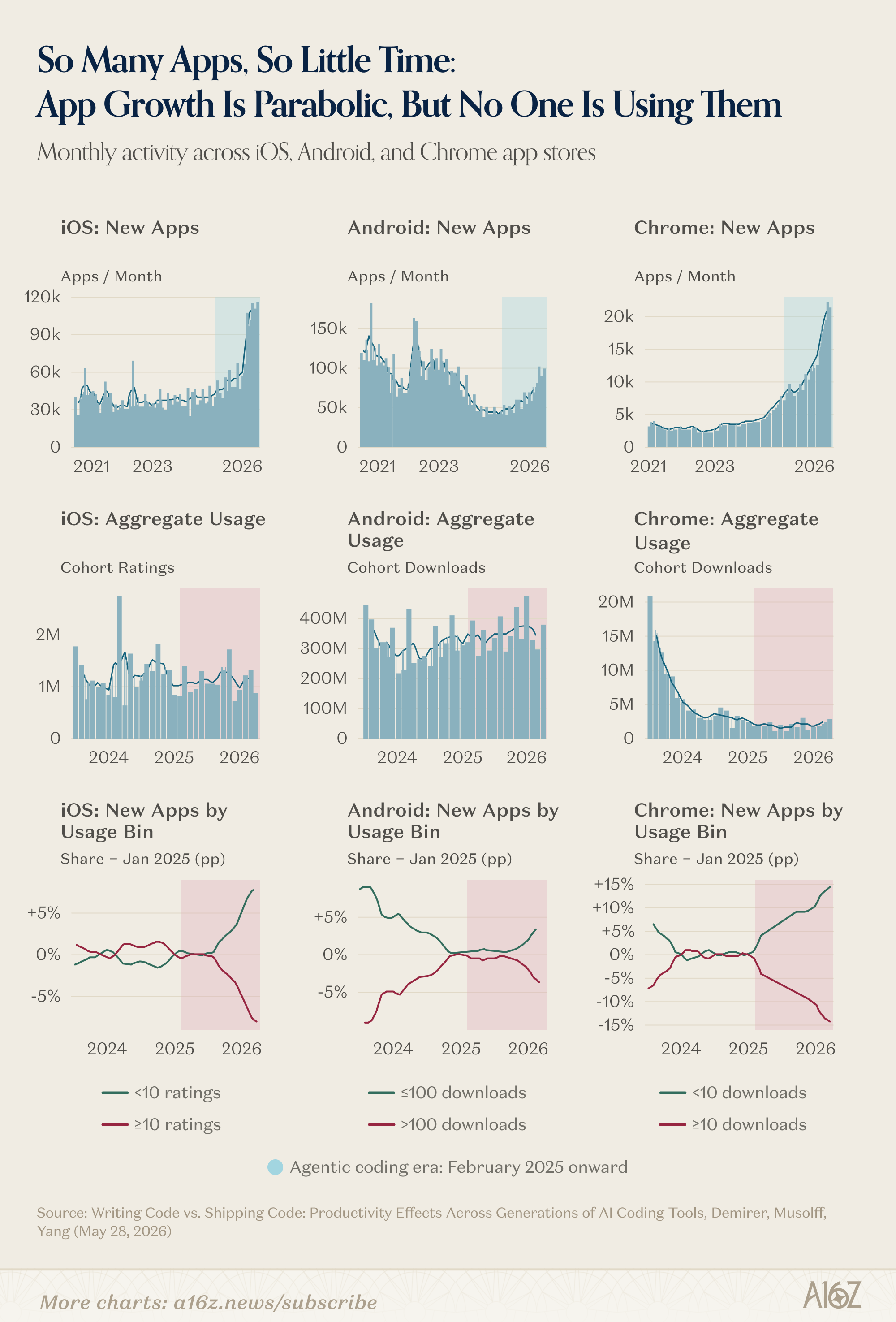
The number of new iOS apps being released each month exploded, almost doubling between early 2025 and April 2026. Yet despite this growth in new apps, overall usage barely budged, and fewer new apps were gaining meaningful traction.
3. Investors jump in
Dot-com era
The dot-com gold rush really ramped up in August 1995 when Netscape went public.
Netscape was a new web browser, considered by some to be faster and easier to use than Mosaic. But it was their IPO that really galvanised the public and created a new investment wave.
Despite the company making a loss, demand was so intense that the IPO price was repeatedly raised, from an initial $14 per share to $28 by the time it went public.
Even with the upsized IPO, its shares more than doubled on their first day of trading, giving the company a market cap of about $3 billion (roughly $6.6 billion in today’s money).
The message to Wall Street was clear: a company didn’t need profits to attract investors. The promise of future growth was enough.
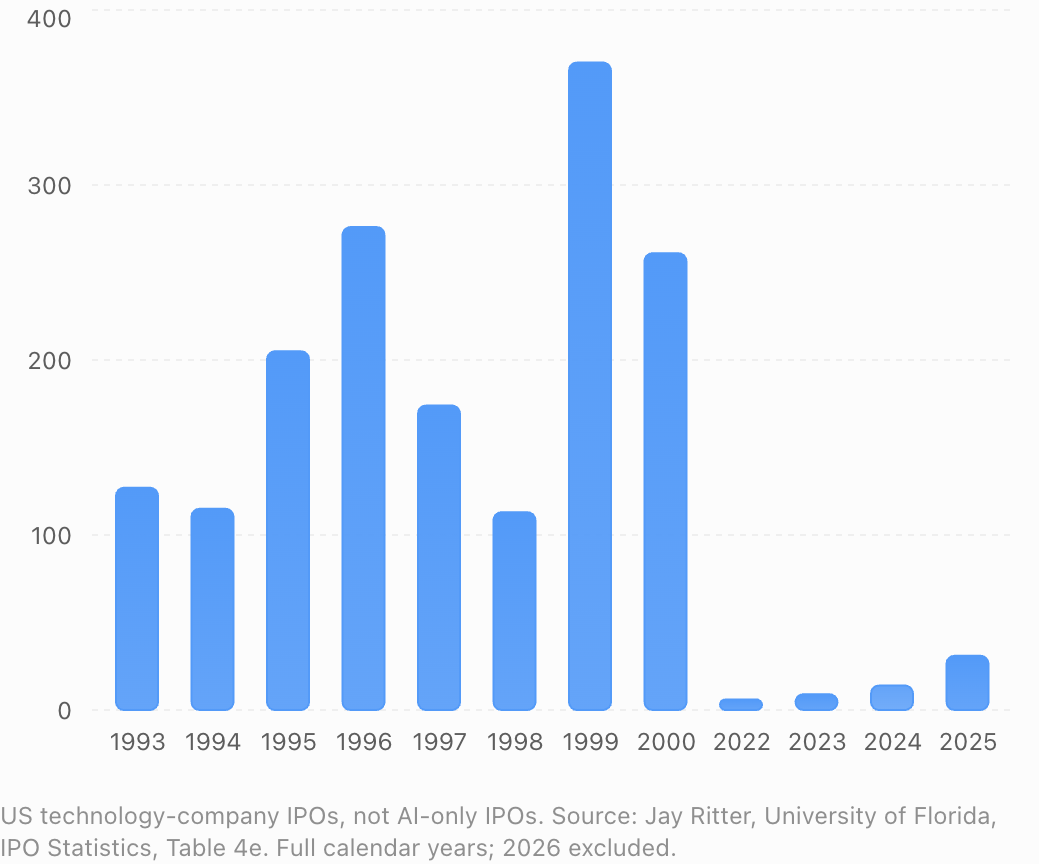
Hundreds of technology companies went public during the 1990s, giving ordinary investors the opportunity to participate in the boom.
AI era
Today’s AI boom has been different. Two of its most prominent companies, OpenAI and Anthropic, have reached a combined valuation of $1.8 trillion while remaining in private hands. That’s roughly 600 times Netscape’s valuation on its much-celebrated IPO day in 1995!
Much of that increase in valuation has therefore accrued, on paper, to founders, employees and private investors, rather than public shareholders.
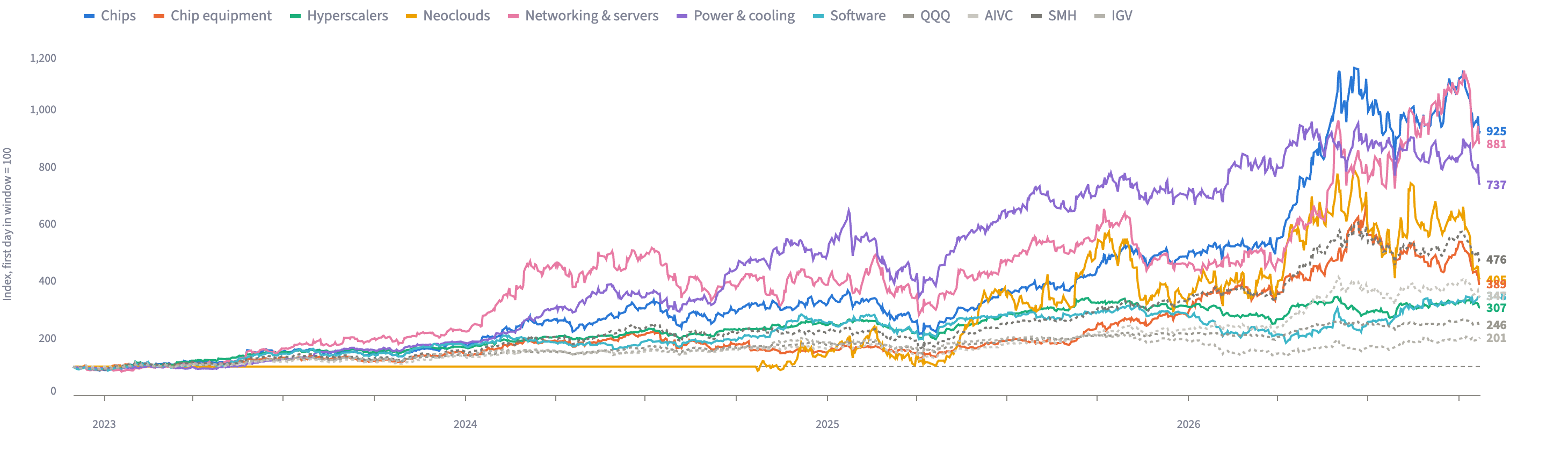
This time, much of the speculative enthusiasm has been directed towards publicly traded companies across the AI supply chain, from chipmakers and data-centre operators to power and cooling suppliers, as well as software businesses benefiting from the technology.
To illustrate where that enthusiasm has been concentrated, here’s an excellent dashboard tracking the performance of different segments of the AI trade.
4. Tech Celebrities Emerge
Dot-com era
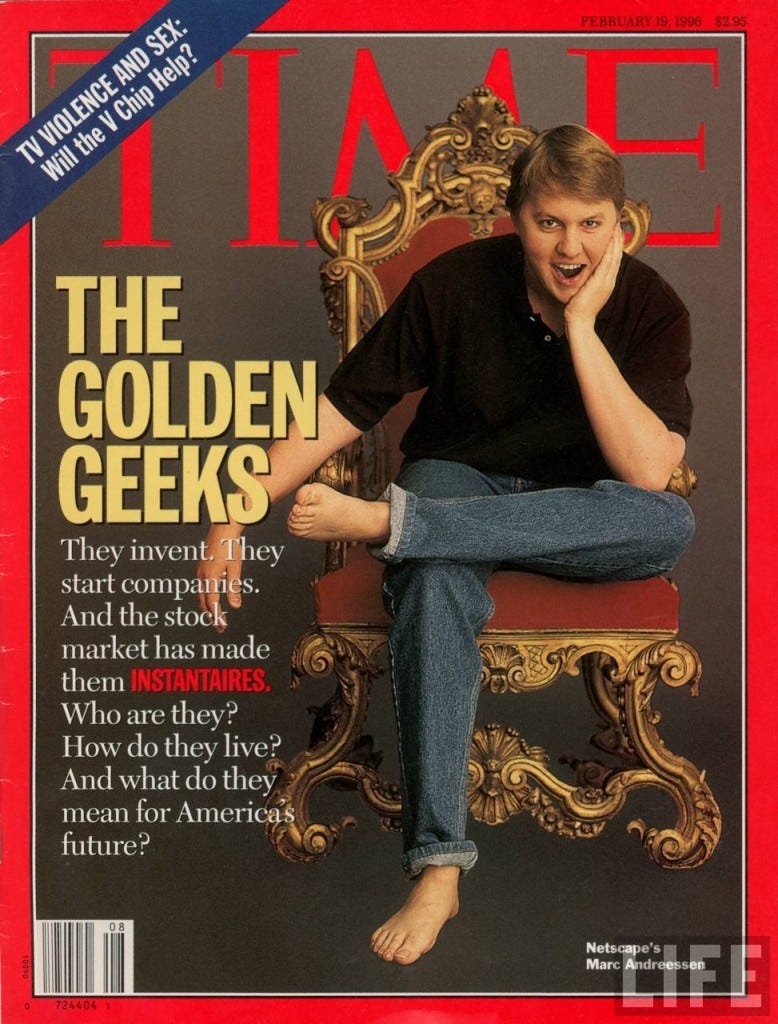
As internet stocks soared, their founders became enormously wealthy, and the general public became fascinated by them.
Take Marc Andreessen, whose Netscape shares were worth roughly $58 million following the company’s IPO.
AI era
Jump to 2023, and Sam Altman, CEO of OpenAI, was becoming a celebrity himself, appearing on the cover of TIME magazine.

The contrast between the portrayal of these two couldn’t be more stark, reflecting the broader public mood of the two technologies:
In 2000, a UCLA study found that just 7% of internet users believed new communication tech, including the internet, had made the world a worse place.
Compare that with a recent Marquette University survey that found that 56% of Americans who had used AI in the previous month believed its development was bad for society.
5. The Infrastructure Gold Rush
Dot-com era
By the late 1990s, the internet was expanding rapidly and this triggered enormous infrastructure investment.
Telecoms companies raced to build networks and lay fibre-optic cables, while companies like Cisco (NASDAQ:CSCO), Nortel and Lucent supplied much of the equipment needed to make it all work.
It was lofty forecasts that really got investors salivating for the stocks of these companies though. WorldCom repeatedly promoted the idea that internet traffic was and would continue doubling roughly every three months.
This expectation proved wildly optimistic. Traffic continued growing rapidly, but nowhere near fast enough to justify all the new capacity being built.
Advances in optical technology added to the surplus, and competition pushed carriers into cutting prices to win market share.
For many network operators, that was disastrous. The internet was succeeding, but the economics of providing the infrastructure were deteriorating.
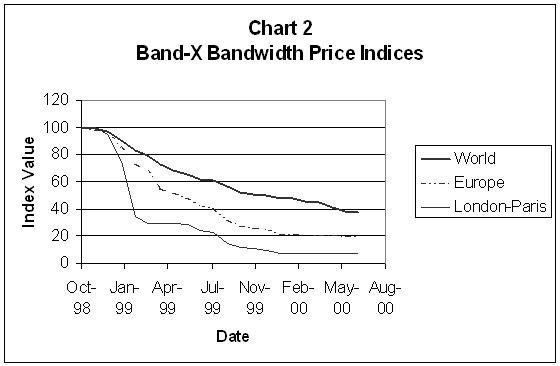
A silver lining was that infrastructure itself was not wasted, demand eventually caught up. But that did not necessarily make it a good investment for the companies that paid to build it.
AI era
Today, we’re witnessing another wave of infrastructure spending. This time it’s GPUs, specialised chips, memory, data centres, networking equipment, and the power and cooling systems needed to keep everything running.
Much of the initial buildout was financed through the enormous operating cash flows of Hyperscalers. But increasingly, debt and equity financing are playing a larger role, particularly among companies building and leasing out computing capacity.
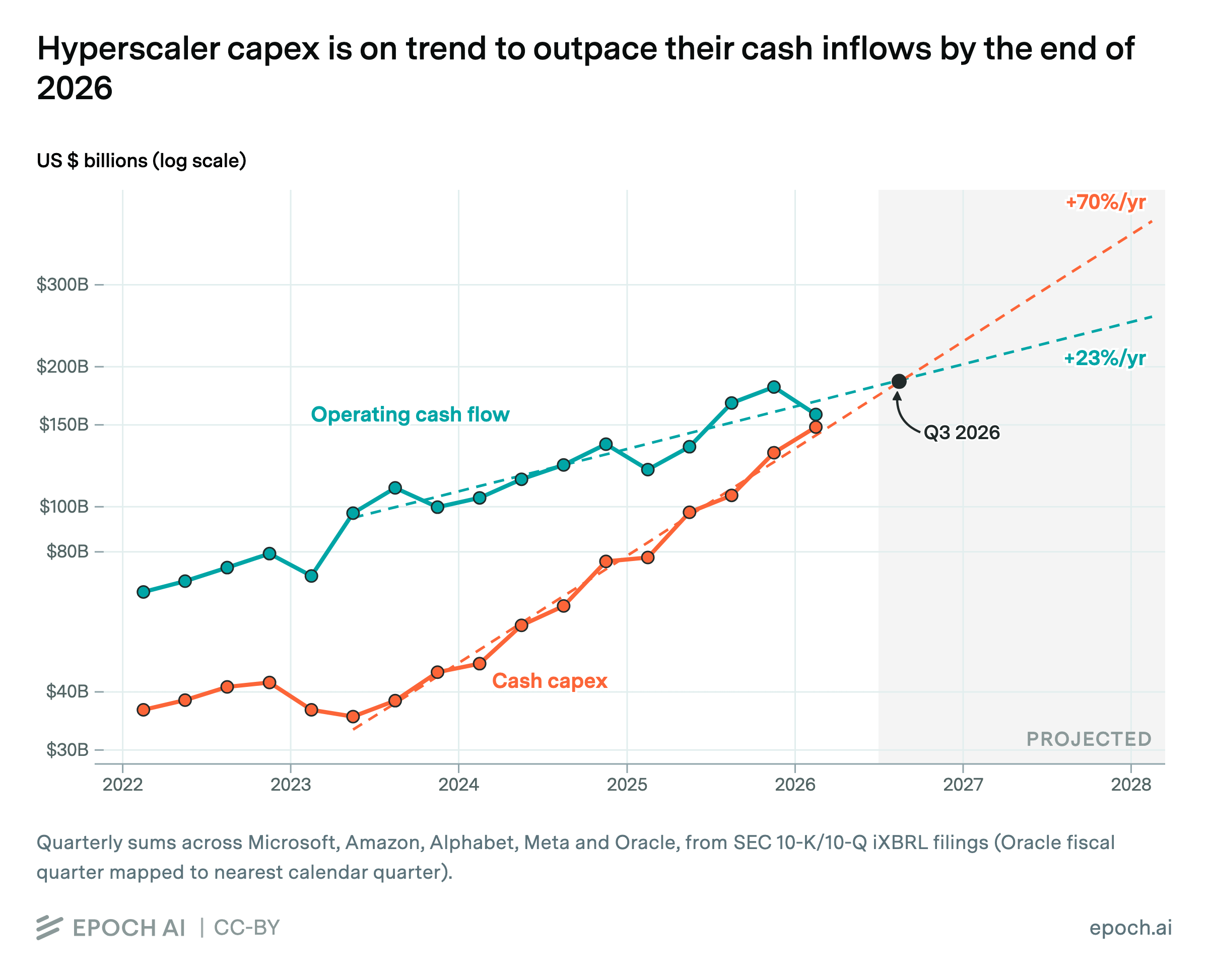
Just like the dot-com era, all this spending rests on some lofty expectations for future demand. This time, it’s the revenue that AI labs like OpenAI and Anthropic can generate.
In a recent interview, investor Citrini suggested that the AI infrastructure boom could eventually end “with a whimper instead of a bang”.
His argument is that it might not take a spectacular collapse to bring the boom to an end. If forecasts for the leading AI labs’ combined annual recurring revenue (ARR) were revised downwards from, say, $400 billion to $360 billion, the consequences could ripple through the entire infrastructure supply chain.
Just as with the dot-com era, demand doesn’t need to collapse for investors to get burned. It simply needs to fall short of expectations.
6. Mania
Dot-com era
By 1999, the boom was reaching absolute mania. There were 289 internet IPOs that year, with an average first-day share-price increase of 90%.
Sixteen internet IPOs had risen more than 1,000% from their offering prices by year-end. The tech-heavy Nasdaq rose 85.6% in 1999, with most of those gains occurring in the final two months of the year.
Investors were increasingly willing to overlook traditional measures like profitability and valuation. The promise of extraordinary future growth was seemingly all that mattered.
Simply adding “.com” to a company’s name could help send its share price to the moon. Companies adopting internet-related names enjoyed average abnormal stock returns of around 74% over the ten days surrounding their announcements.

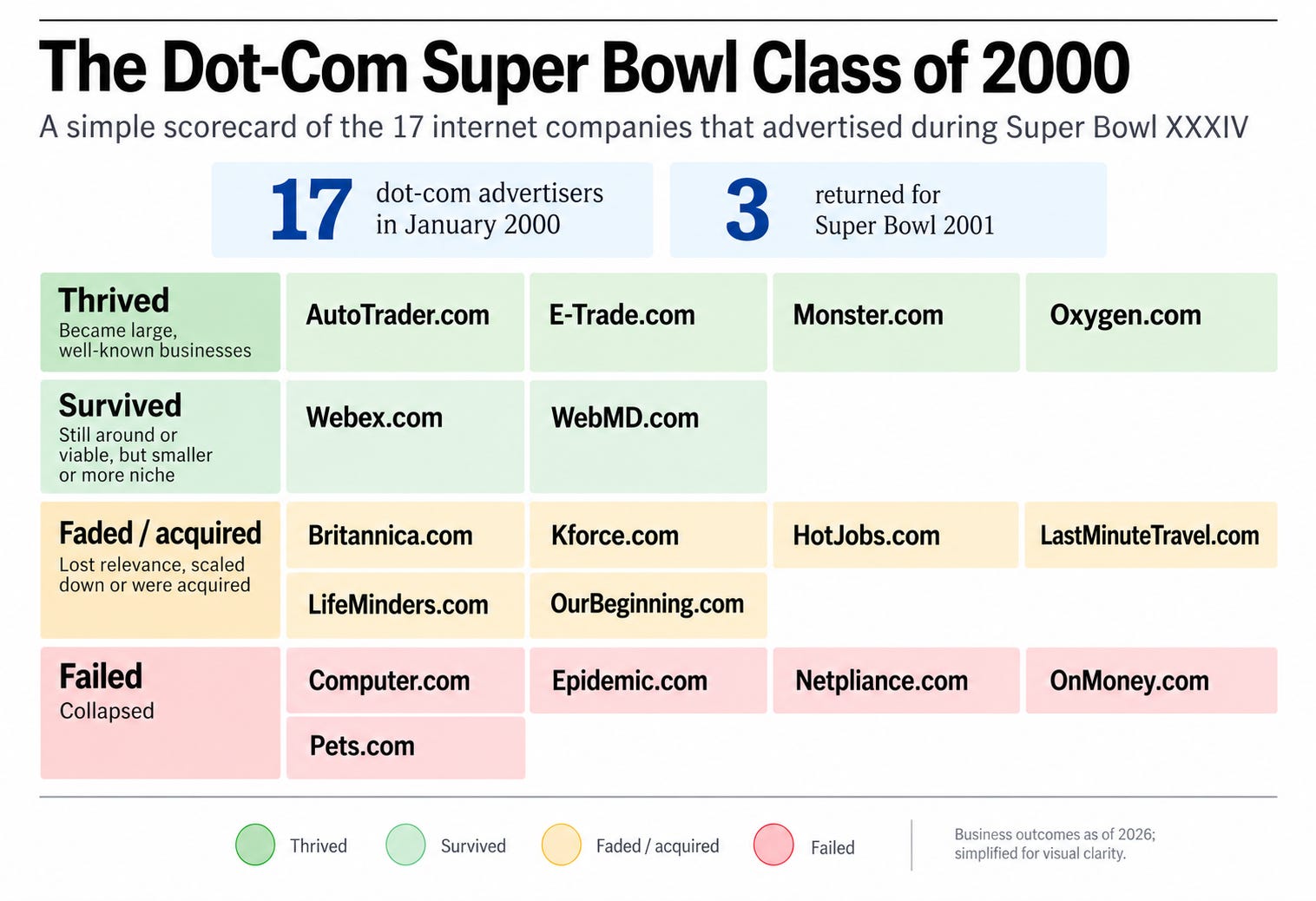
In January 2000, around 17 internet companies advertised during the Super Bowl, including Pets.com and its famous sock-puppet mascot, which became emblematic of the era’s extravagant marketing spending.
Here’s what eventually happened to those companies:
AI era
In October 2026 the Nasdaq is up around 12% for the year. A muted gain when compared with the 85.6% surge of 1999.
But signs of speculative mania can be found elsewhere.
Take South Korea’s KOSPI, which surged 75.7% in 2025, its strongest performance since, you guessed it, 1999!
Much of the excitement this year has been concentrated in semiconductors. By October 2026, just two companies, Samsung Electronics (KRX:005930) and SK hynix (KRX:000660), accounted for roughly half the index’s market capitalisation.
And the familiar trick of adding a fashionable technology to your company name is making a comeback.
In April 2026, struggling sneaker company Allbirds (NASDAQ:BIRD) announced it was renaming to NewBird AI and shifting from making shoes to AI computing infrastructure. Its shares surged 582% in a single day.
It seems adding AI to your business is becoming the new adding ‘.com’ to your name.
7. The Crash
Dot-com era
On 10 March 2000, the Nasdaq hit a record closing high of 5,048.62, having risen more than 500% over the previous five years.
Only five weeks later, the Nasdaq had lost more than 34% of its value.

Like all bubbles, share prices had run too far ahead of fundamentals. But it was only obvious in hindsight. During the year 2000, retail investors continued to pour $260 billion into US equity funds. This was up from the 176 billion invested in 1999.
By October 2002, the Nasdaq had fallen almost 78% from its peak. Hundreds of companies had collapsed or seen their valuations decimated. The index wouldn’t recover its March 2000 high until April 2015, more than fifteen years later!
Of course, some companies, like Amazon and eBay, would go on to prosper. Others, like Yahoo, became shadows of their former selves. And Netscape gradually lost its browser market share to Microsoft’s Internet Explorer before fading into obscurity.
Despite the crash, the internet would, of course, go on to revolutionise the world. Just not in the way many late-90s investors had hoped for.
AI era
We’re not yet at the point of a calamitous market crash.
But we ARE repeating some of the mistakes that led to the dot-com crash.
I suspect we’ll see a series of rolling booms and busts, as speculative enthusiasm moves from one part of the AI trade to another, before a broader market crash sometime in the future.
We’re seeing this play out with some semiconductor names, where a large rally is morphing into a large correction.
So where does the market go from here?
Given that the cost of achieving a fixed level of AI performance has been falling roughly 13-fold annually, I expect the next phase to bring a surge in business adoption. Great news for the wider economy, but potentially problematic for those financing the infrastructure, particularly if demand fails to grow fast enough to offset falling costs.
With this in mind, in the short term I’m particularly interested in companies helping businesses implement AI. Accenture (ACN 0.00%↑) comes to mind.
But further out, there are more interesting opportunities hiding in plain sight.
Businesses with substantial administrative and white-collar operations could be among the biggest beneficiaries, using increasingly cheap AI to reduce costs, serve more customers and grow earnings.
Some of the greatest investment opportunities therefore may emerge in companies we don’t even think of as AI investments today.
Conclusion
Investors correctly predicted that the internet would transform the world. Yet countless people lost their shirts speculating on its future, often getting the companies, valuations or timing spectacularly wrong.
I expect AI to be just as transformative. But looking at today’s boom, I’m not convinced we’ve learnt the most important lesson from the dot-com era:
Being right about the technology doesn’t necessarily mean being right about the investment.