
How to Find a Megatrend Before Anyone Else
Pt 1, A framework for finding the start of a major move in commodities and Bitcoin

Context
In the last century, a few assets drove most market returns. Those who made the most money found these assets early, bought in while others waited, and exited at the top.
Many get one of these steps right, but not all three. This article series focuses on mastering all three: spotting the start of a megatrend, riding it, and exiting at the peak.
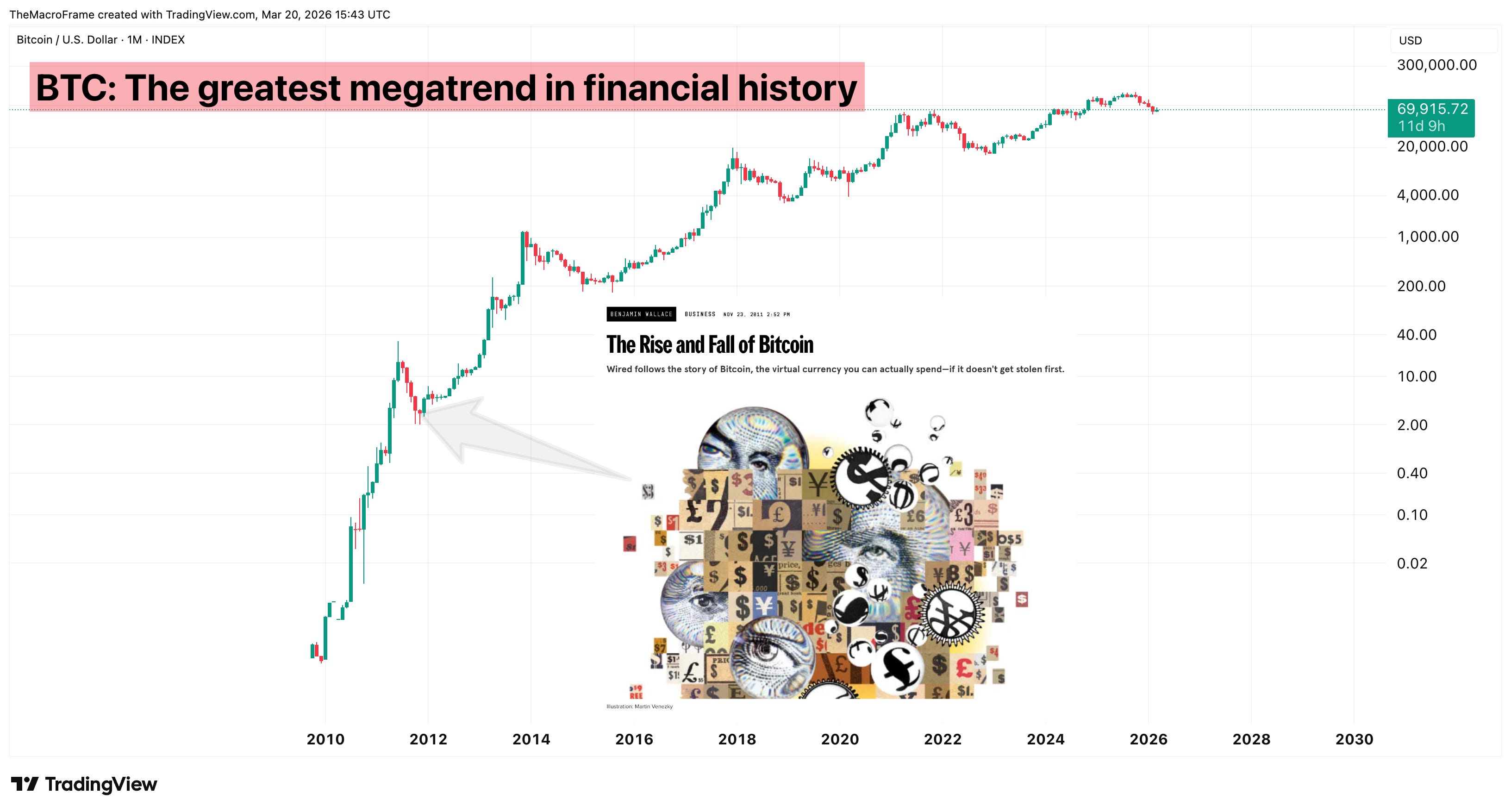
Overview
Before we jump into the framework, one prerequisite: curiosity.
Not curiosity about markets or investing specifically. Curiosity about everything, especially the Zeitgeist. Think like a detective — the criminal rarely walks in and confesses. You’re hunting for anomalies, often anecdotal, that build a case beyond reasonable doubt. Signals in places others aren’t looking.
Start with asset, industry, or something more broadly in the Zeitgeist that seems extreme or dismissive. A headline that feels like it captures negative sentiment in a neat package: ‘death of the dollar’, ‘gold, a pet rock’. It’s only when you look closer that the contradiction appears.
What you’re looking for is a gap between the narrative and reality: between what people are saying and what the fundamentals actually show.
One way to find this is to read mainstream media backwards: look for what’s ignored, mocked, or fought over, not what to buy. Listen to people in real life without asking loaded questions and pay attention to negativity, ideology, dismissiveness. That’s a signal to dig deeper.
The cocktail looks like this: ‘it’s bad, and it can get even worse’ in the headlines, yet you observe demand outpacing supply, and a price chart that looks like roadkill…
Every signal you find will point to one of three things: how people feel about an asset, whether the underlying numbers support a different story, and what the price itself is doing. Narrative. Fundamentals. The chart.
All three need to be in harmony. Two out of three is interesting. Three out of three is a megatrend.
The Framework
Narrative - Is it hated enough?
The “you’re wrong” narrative needs to be loud. If everyone already agrees with you, who’s left to buy?
At the start of a megatrend the asset or industry is despised, laughed at, ideologically dismissed.

To get a proper read on the narrative, you want signals from multiple sources, not one person’s opinion. Aim for five or more real life conversations, ask unloaded questions, and look for themes across the responses. Social media and mainstream media work too, just know the demographic you’re talking with.
Below I have categorised examples of conversations from my real-world experience. I’ve given these individuals ‘personas’ to help them come alive, they are your involuntary truth-tellers, that help provide clues about what to look for not an exact science:
The Headline Reader. Someone who knows little about the industry or asset but speaks confidently about it. They’re regurgitating headlines, not doing research, which makes them a perfect proxy for the popular narrative. It doesn’t need to be an investing conversation. I got interested in energy through hearing the same scathing take on oil and gas industry repeated by people whose opinions were informed almost entirely by headlines, with no research behind them. That led me to dig deeper.
The veteran insider. A farmer for agri commodities, a gold stacker, someone who has held an asset for years. Still in. Still convinced. Ask them about the price and watch closely. You’re looking for a discrepancy between their words and their body language. Vocally defensive: “I knew it would drop, I’m just buying more.” Said through slightly gritted teeth and a slightly pained look. The words are confident. The body isn’t. Nobody ever sells as much as they wished before a drop. So you see both truths at once, one from the voice, one from the body.
The Burned Beginner. Someone who has been in the asset less than a year with little investing experience behind them. Ask them about it and watch what happens. People rarely admit they sold at the wrong time, so you're not listening for a confession. You're looking for the brush-off. "Oh yeah, that thing, not doing that anymore." Casual words, but something happens in the chest before they say it. A slight pull back, a closing off. They've moved on because it hurt, and they don't want to say so.
The Regulator. Watch for bans or threats of bans, punitive taxation, government inquiries, and central bank warnings. When the state starts swinging at an asset or industry, it’s a reliable signal that it’s deeply out of favour. If it weren’t, the public outcry would make it politically impossible.
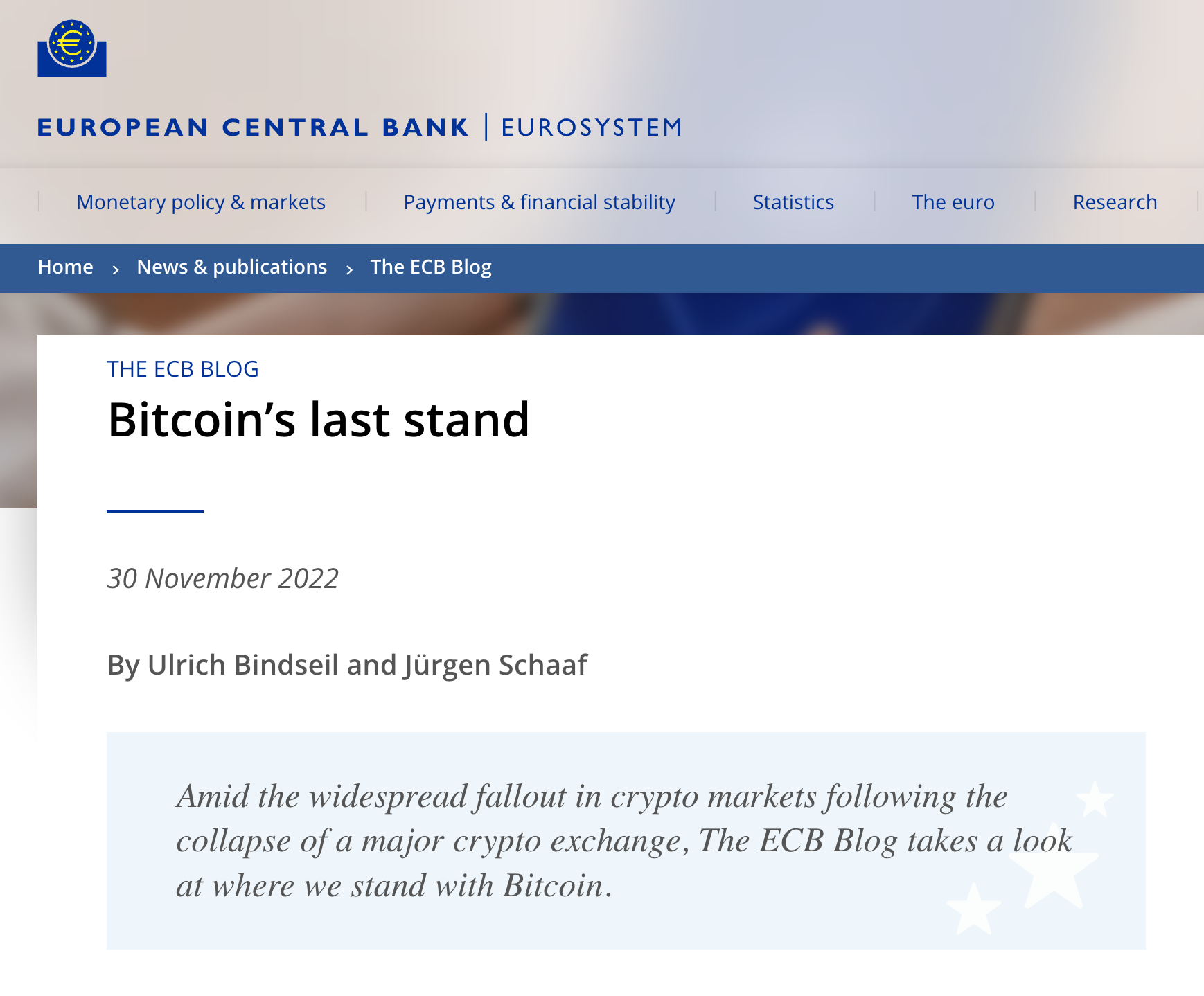
The ECB is a good example. In November 2022, with Bitcoin sitting around $16,000, two ECB economists published a blog post titled “Bitcoin’s Last Stand.” They called it irrelevant, unsuitable as investment or payment, and an unprecedented polluter. It felt most true at precisely the moment it was least true. Within two years Bitcoin was trading above $100,000.
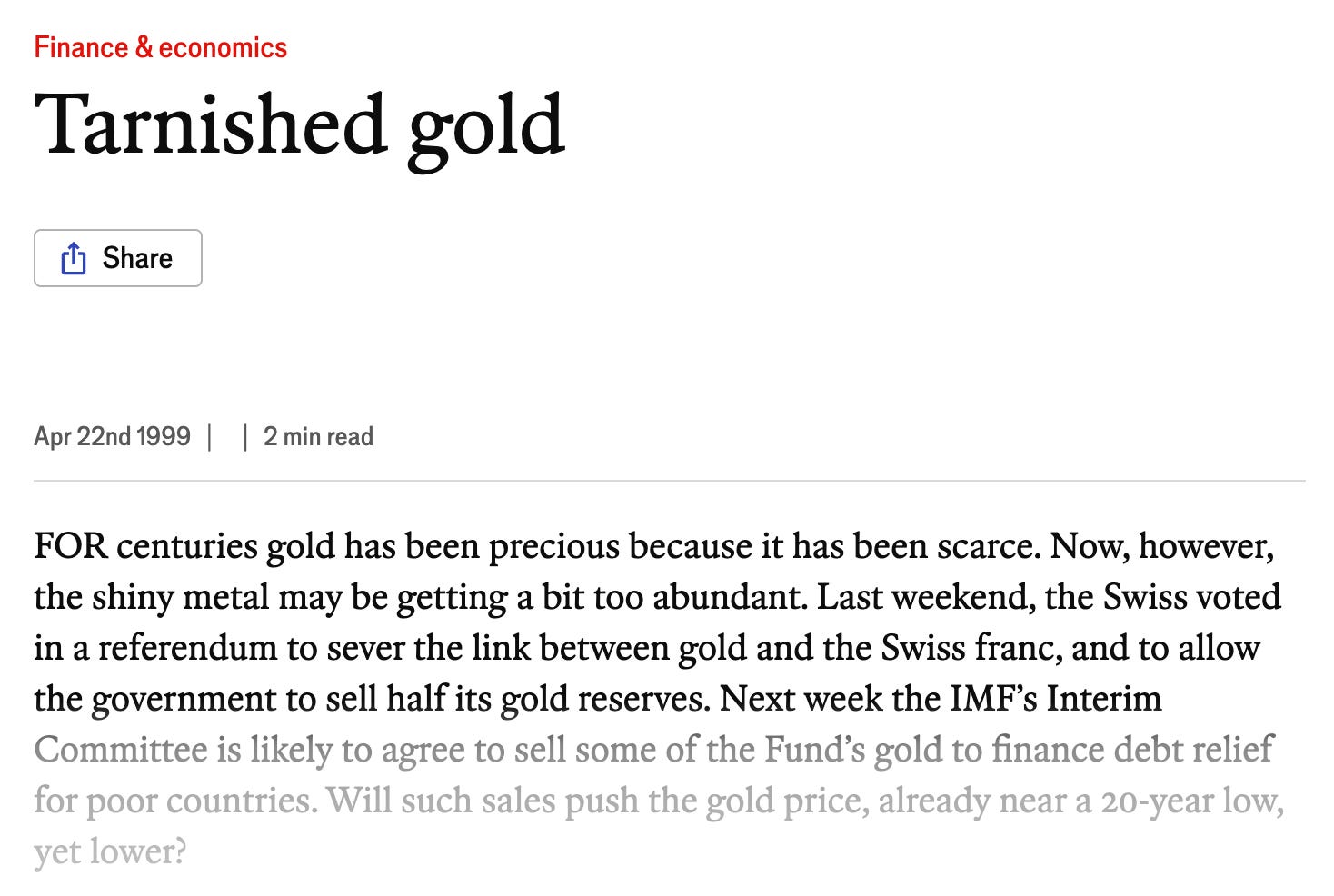
Media. Watch for schadenfreude, fearmongering, and the “it can only get worse” tone. Media mirrors sentiment almost perfectly because fear sells, and especially so at the moment when the most panic is present. The most damning headlines often arrive at the bottom, not the top.
Fundamentals - is there a supply and demand imbalance?
For commodities and Bitcoin alike, supply and demand is what matters most. We could spend a whole series on the metrics that help inform your view here. At its core though, you’re looking for stark imbalances that fit the context of what is happening globally.
The difficult part is being early. By the time the fundamental case is obvious to everyone, the price has usually already moved. You either need to develop the thesis yourself, or spend time in corners of the internet where others are thinking about it early. The mainstream will catch up eventually. That’s the point.
Let's walk through a real example you can use as a template: during covid, a barrel of WTI oil briefly went negative. Do you remember that day? The headlines?
Was your instinct to invest? Mine neither. But that’s exactly the moment this framework is built for.
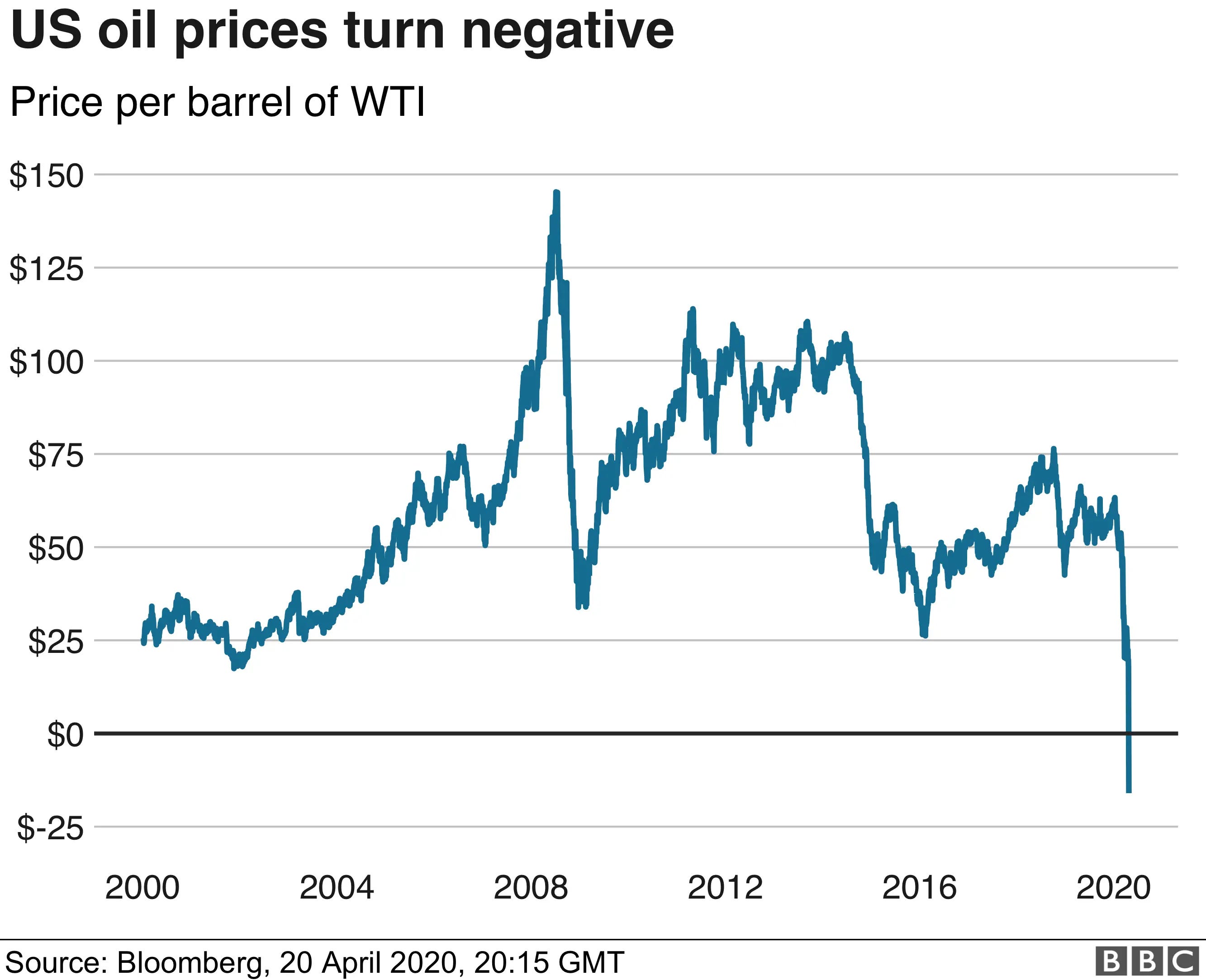
Think about what you actually knew at the time. Oil is in almost everything that isn’t a rock, a plant, or a metal. The breakeven for most producers sits around $60 a barrel, below that and production stops being economical.
So the question was simple: would humans stop needing clothing, heating, hospitals, transport? Or would demand return and price have to follow? Obviously the latter.
But our brains default to reading crashes as endings rather than beginnings. That instinct is the enemy of investing if you choose to listen to it, or your best partner when you choose to do the opposite.
Technical Analysis - Is it true roadkill
You've found a hated asset with strong fundamentals that are not widely known. Not so fast. The chart is the final check. It contextualises everything above and confirms whether you're at the start of something or not.
The first thing to look for is where price already is. If it has already moved significantly, the opportunity may have passed. Gold rose roughly 100% in the two years before the 2026 Middle East escalation. You might expect it to catch a bid on geopolitical risk. But gold failing to make new highs in the early stages of the conflict was a signal of exhaustion, not opportunity.
What you want to see is the opposite: a beaten down chart showing the culmination of a downtrend. A brutal, extended sell-off pushing into genuine panic, followed by a slight stabilisation. Then the price attempts to break lower again. If that second attempt fails, accompanied by really bad news, that is your signal. The bad news arrives, the price tries to break down, and it can’t. That’s where the maximum opportunity lives.
Below are two examples of what this looks like on a chart. Both show the same pattern: an extended decline, a stabilisation, and a failure to make new lows. Both felt like the end at the time.
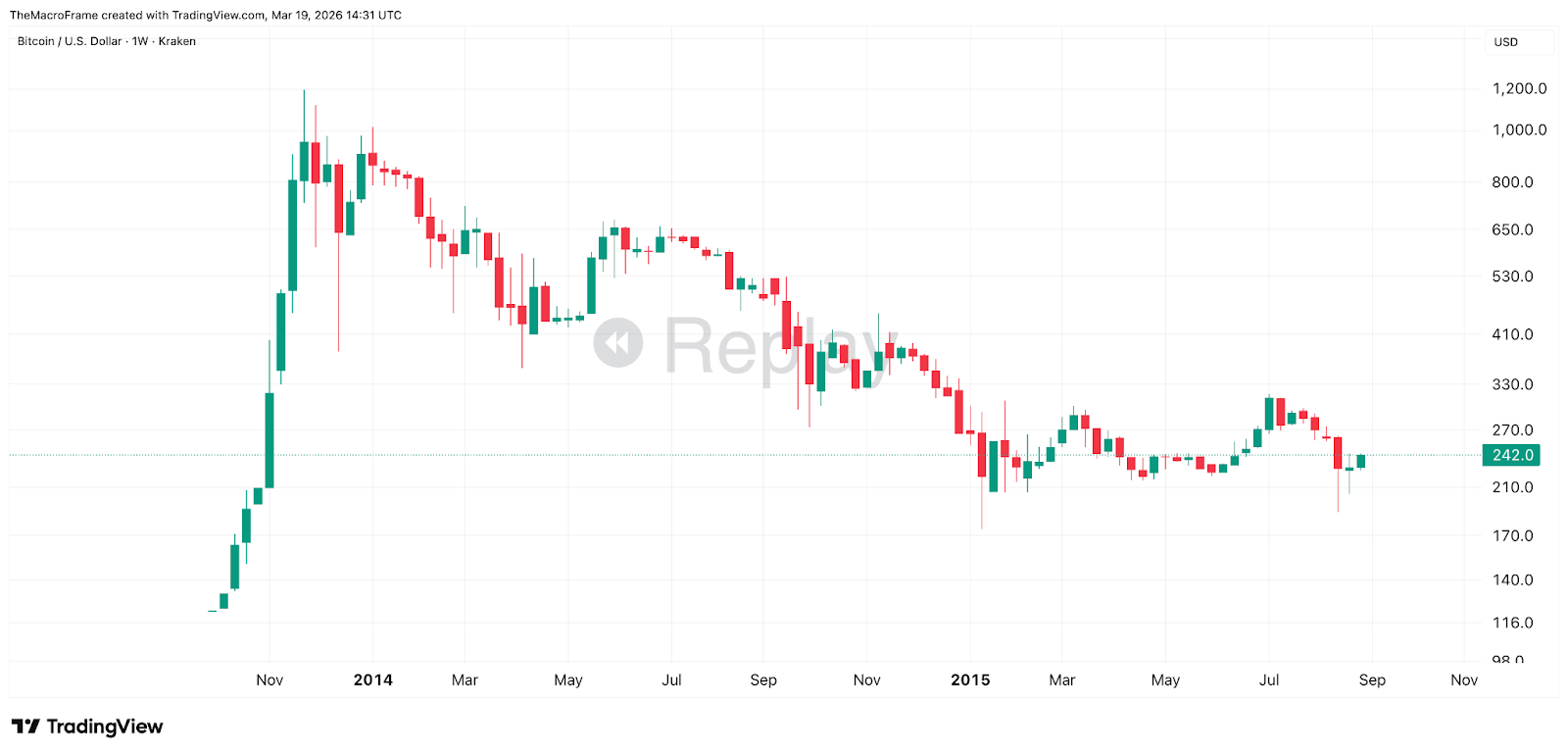
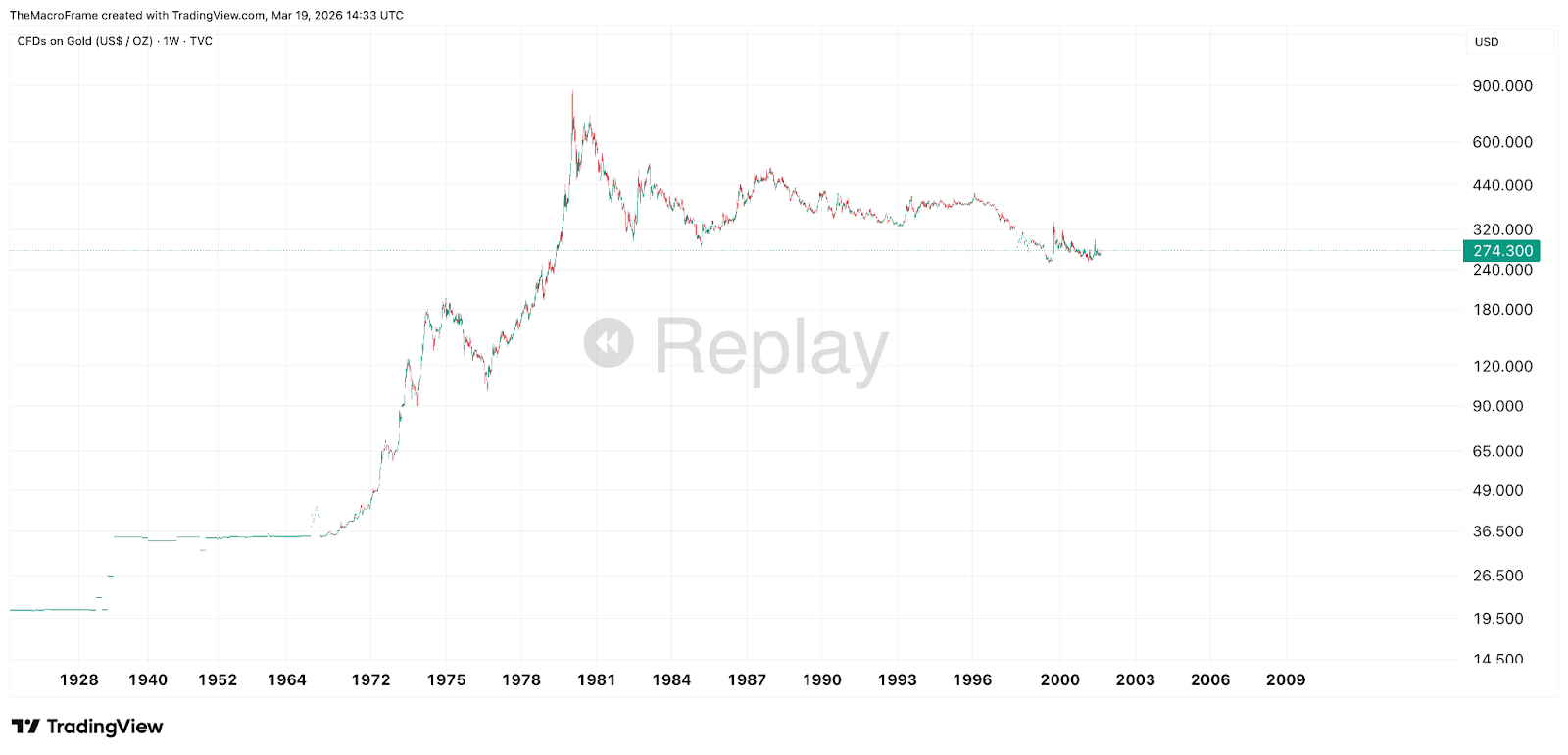
Study ‘bottom’ charts carefully, because at the point of maximum opportunity it will not feel like it. That’s the point.
I learned this the hard way in 2013. I had been buying Bitcoin all the way down from $265 to $60. Then the Silk Road bust hit on October 2nd. The FBI had shut down the dark web marketplace that Bitcoin’s transaction volume was heavily tied to at the time. I convinced myself it would fundamentally impair the price and sold a large chunk as Bitcoin dropped from $120 back to $60.
A few weeks later it was at $1,200. I had panic sold near the bottom.
The Silk Road news was exactly the kind of catastrophic headline that signals exhaustion rather than continuation. Really bad news. Price already beaten down. Second attempt to break lower. I had every ingredient in front of me and still sold. The urge to sell at that moment is overwhelming. The wisdom is doing the opposite.
That's how you find the bottom. Part 2 is about what happens next: how to ride a megatrend without shaking yourself out of it before it's done.