
The Coming Problems with "VOO and chill!"
Why the Next Decade of Real S&P Returns Won't Look Like the Last

Visit any investing forum these days and you’ll hear the same advice on a loop: “Just VOO and chill!”, which is internet meme-speak for “Just buy the S&P 500 to the total exclusion of individual stocks or other asset classes”.
Every social media platform is full to the brim with market participants piling into low-cost index funds, like VOO 0.00%↑, with every paycheck. If you ask them why they adopted this strategy, they point to two genuinely impressive statistics:
The 10-Year CAGR: An outstanding annual return of 13.65%.
The Active Failure Rate: The fact that almost 85% of actively managed funds fail to beat the S&P 500 over a 5-year period.
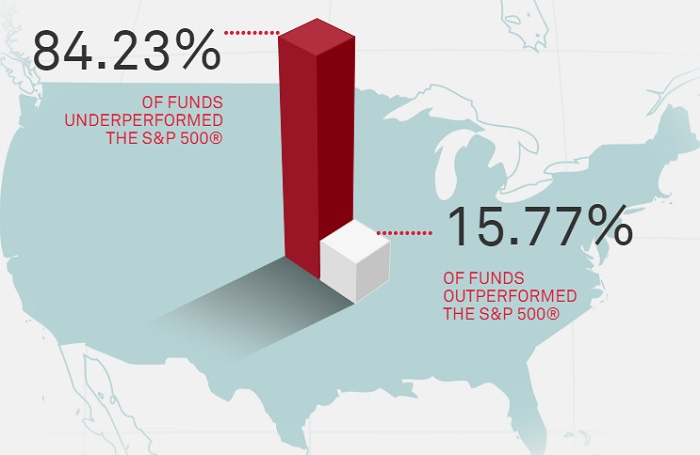
For many investors, having an allocation to the S&P 500 makes perfect sense. But has the all-in index strategy finally run out of steam?
A Brief History of the S&P 500
In 1975, Jack Bogle founded Vanguard, and the next year, he introduced the first index fund for individual investors. This fund tracked the S&P 500, which follows the top 500 US companies, weighted by their size.
Because the fund is market-cap weighted, when you invest, your money automatically flows heaviest into the largest companies.
By 2026, index-investing has become the norm. Some put money in deliberately every month, adopting “VOO and chill” as a strict rule and not trying to time the market highs and lows. Others invest this way by accident through automatic enrolment in workplace pensions.
In both cases, money flows in without considering valuation. “Did you give me cash? Then buy.”
Why “VOO and Chill” Is Becoming a Trap
1. Overvaluation Risk
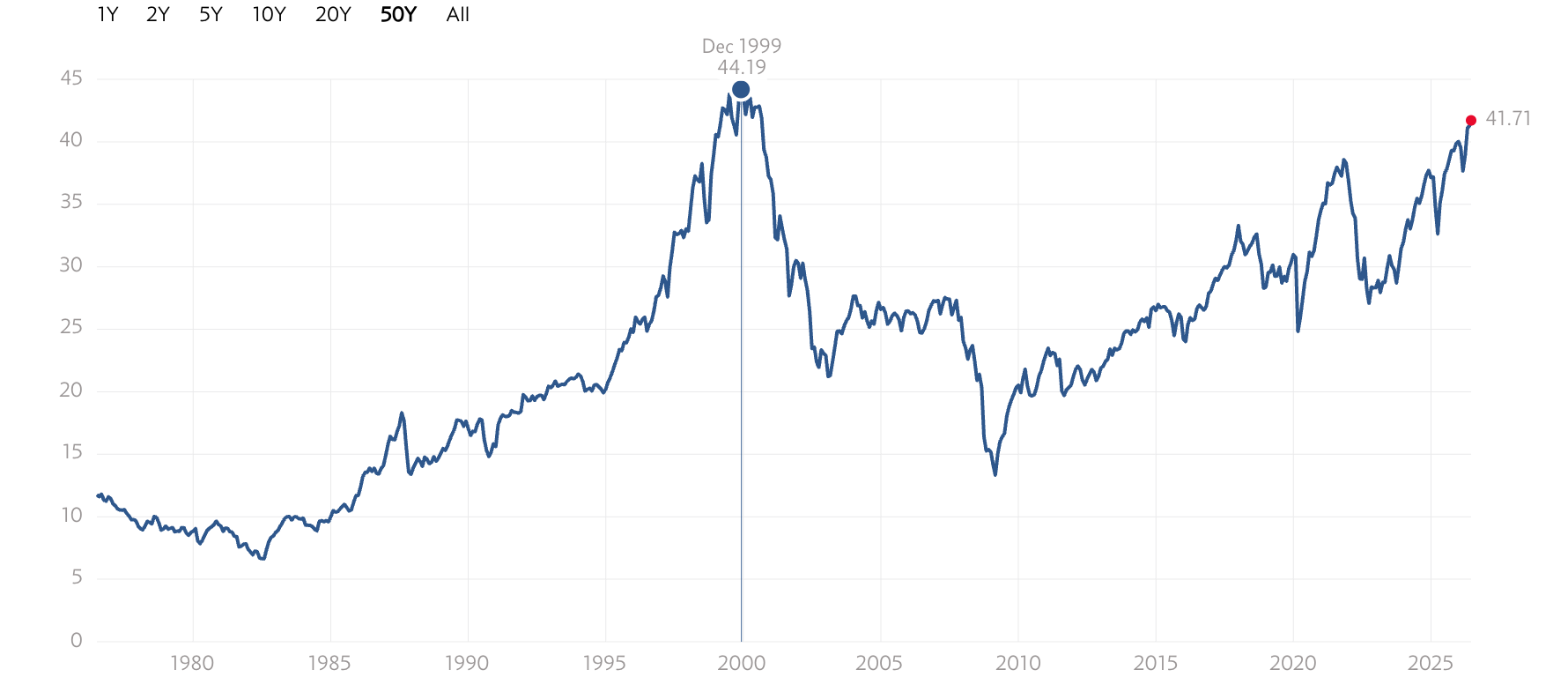
Dr. Robert Shiller, an economics professor and Nobel laureate at Yale, two decades ago introduced the Cyclically-Adjusted Price-to-Earnings (CAPE) ratio, also known as the Shiller P/E ratio. CAPE compares the S&P 500’s current price to its average inflation-adjusted earnings over the last decade.
The CAPE ratio currently sits around 41, compared to a historical median of roughly 16. The only other time U.S. valuations reached this extreme was during the peak of the dot-com bubble.
Robert Shiller tracked the forward 20-year returns of the S&P 500 compared to the Shiller P/E at any given point retroactively since the late 1800’s. The conclusion is that whenever CAPE/PE ratio was over 25, the rate of return over the next 20 years was negative. Here’s his data, from Irrational Exuberance:
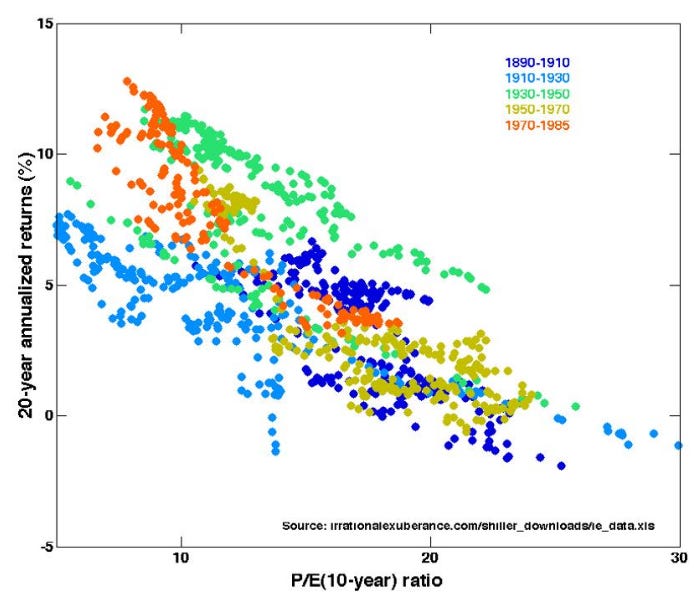
Given this, it’s reasonable to anticipate lower returns in the S&P 500 over the next 20 years.
2. The End of a 40-Year Tailwind
The 10-year Treasury yield affects many things, including mortgages and corporate debt. It was around 15% in 1981 and dropped to almost zero by 2020.
This decline over four decades was a big part of the success of the index funds. When rates fall, stock valuations rise because future profits become much more valuable today.
By 2020, rates had hit their lowest point, and that forty-year trend ended.
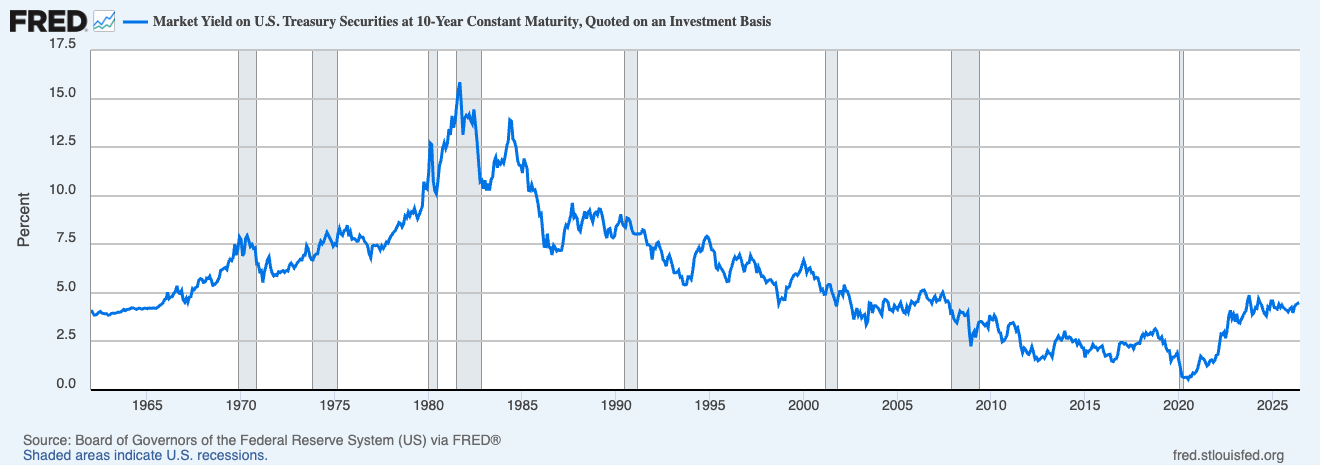
We’re now in a new phase with rates moving higher, which could mean “VOO and chill” sees lower returns over the coming decades. Although US stocks have gone up in dollar value since 2020, they haven’t changed much when priced in gold.
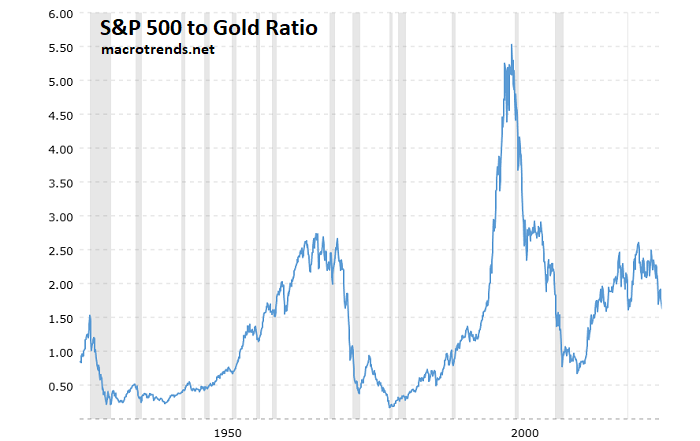
3. Sentiment Is Stretched to Extremes
In 1976, market-cap weighted index funds faced harsh criticism; detractors called them “un-American” and “a path to mediocrity.” This mirrored a general disdain for stocks, highlighted by BusinessWeek’s infamous 1979 cover declaring the “Death of Equities.”
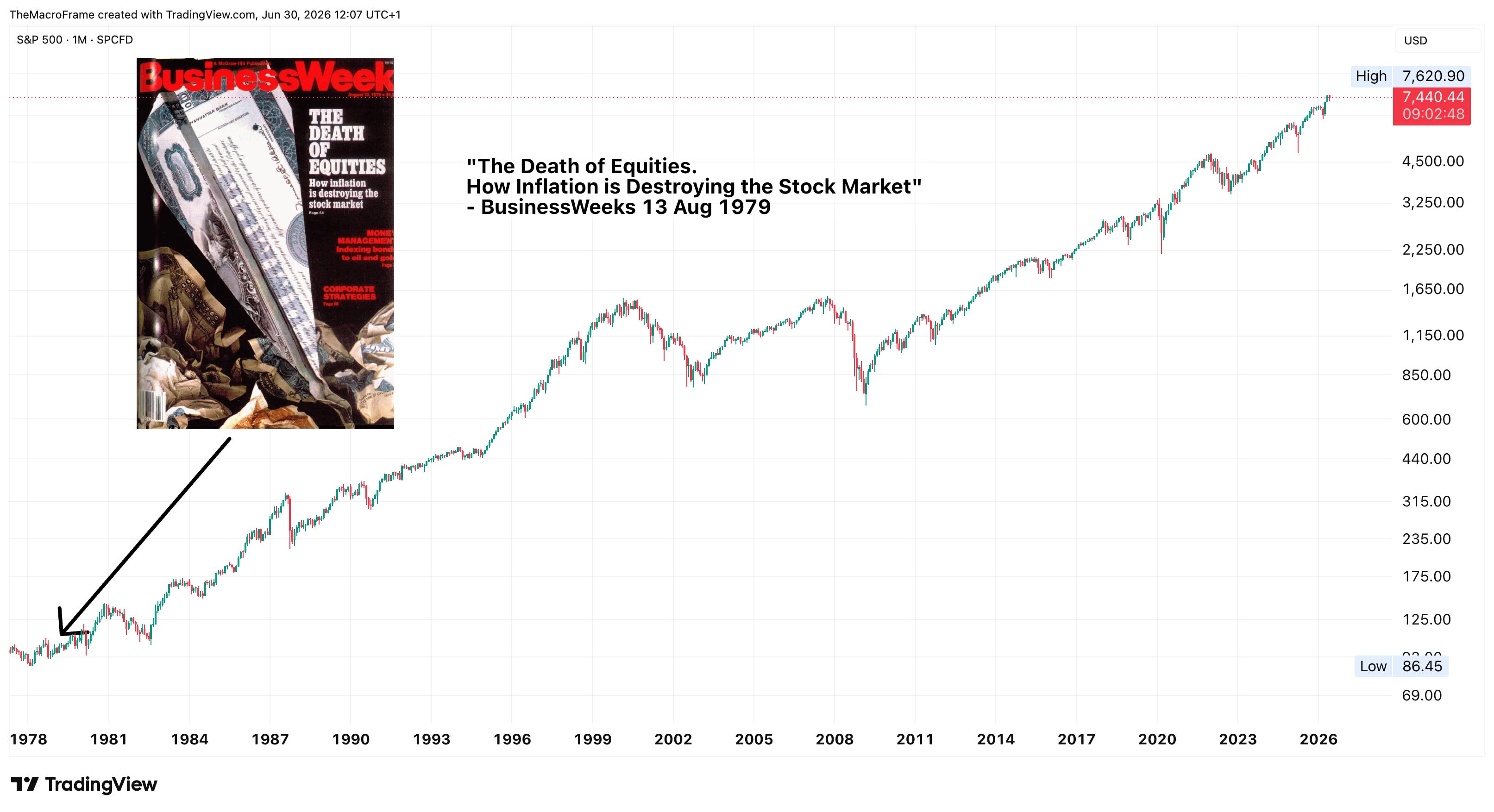
That cover ultimately signalled a generational bottom for stocks. Skeptics gradually turned into buyers, fuelling a decades-long boom, with intermissions.
Today, sentiment has inverted: Jack Bogle, who has now passed, has a near-religious following. Thousands of books promote his methods. Influencers share his ideas with their audiences. Threads on r/investing echo phrases like “VOO and chill, time in the market, just buy the index.”
What once labelled you a fool is now universally accepted. When a contrarian idea turns into something widely loved, it indicates the later stages of a market top.
4. Concentration and Geopolitical Risk
Trust in the U.S. as a singular economic safe haven is shifting. Weaponized financial sanctions, concerns over exported software, and escalating tariffs have strained relationships with allies.
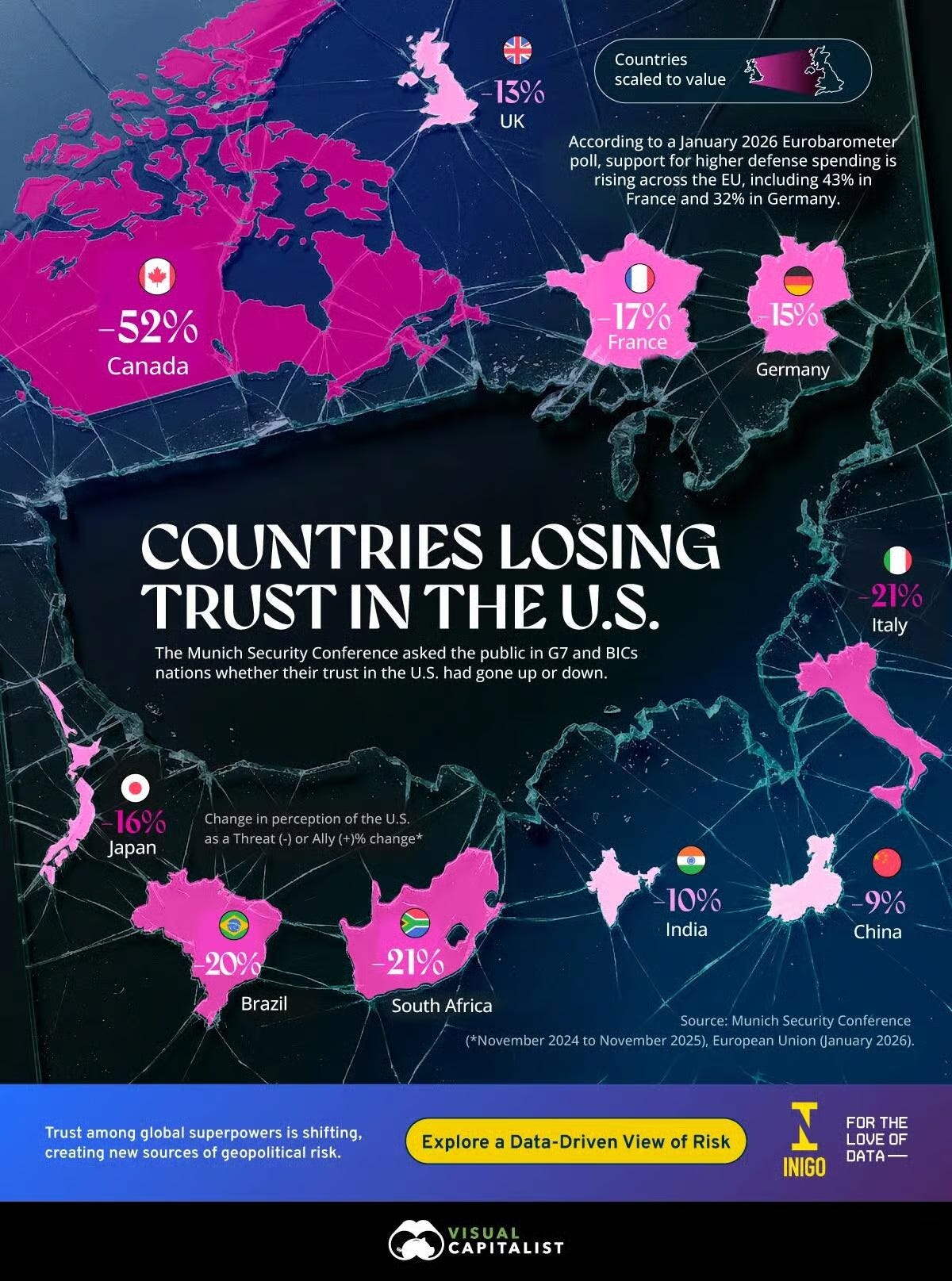
This erosion of international trust directly threatens U.S. corporate profits, as global consumers slowly choose local or non-U.S. alternatives, as well as their capital markets.
5. Demographics: The Changing of the Guard
During the historic bull run, Baby Boomers were in their peak earning years, providing a steady stream of market demand via payroll deductions.
That era is over. Boomers are retiring rapidly and shifting from net buyers to net sellers to fund their retirements.
Furthermore, the incoming generation views investing through a different lens: According to Bank of America’s 2026 Study of Wealthy Americans, younger investors put only 32% of their portfolios in stocks, compared to 58% for boomers, with the rest going into crypto, gold, and other alternatives.
6. Institutional Fragmentation
The long S&P 500 bull market developed within an era of unified institutional narratives. Today, trust in legacy institutions and media has fallen precipitously.
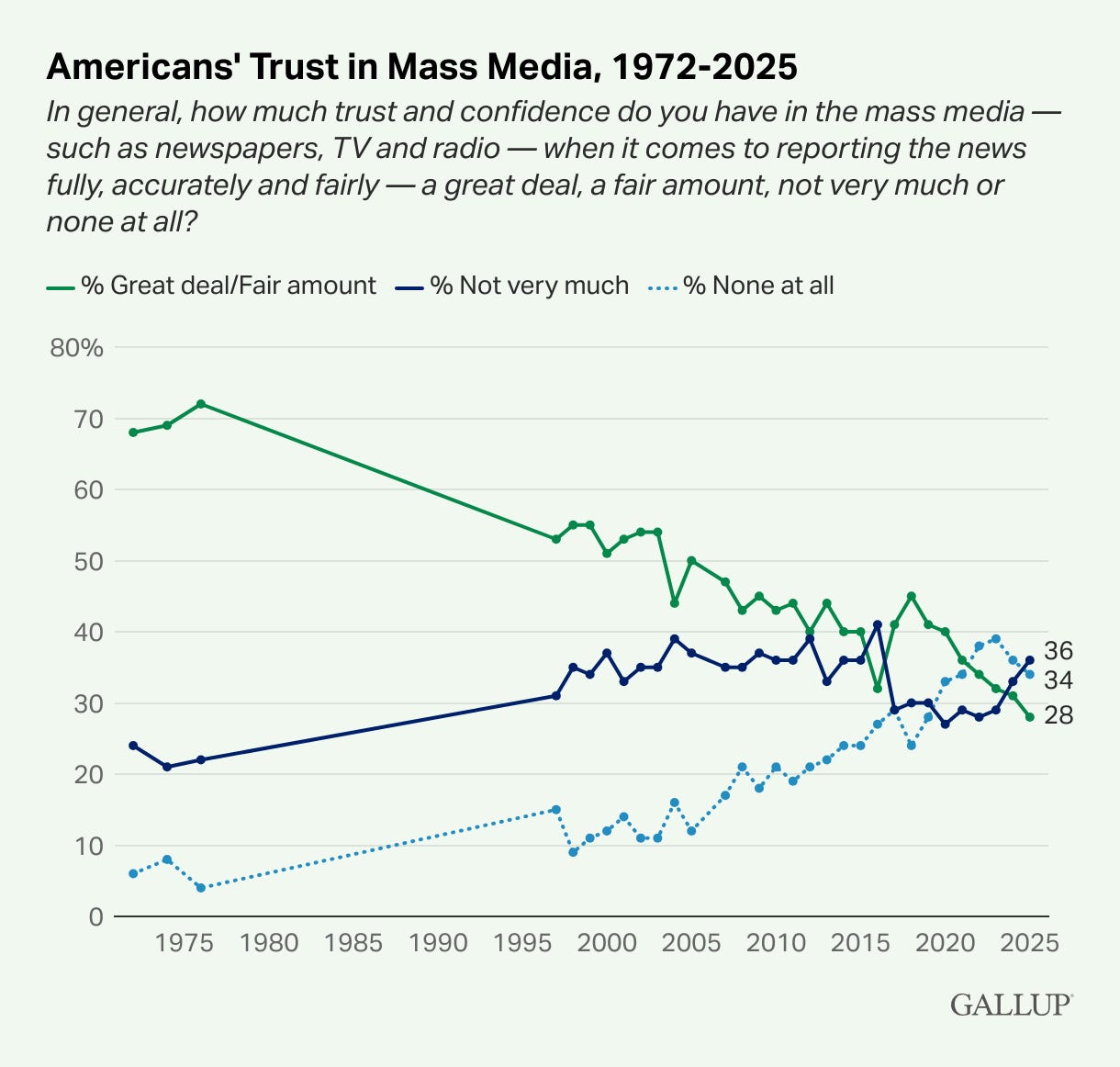
The way we invest is fracturing alongside it. While passive investing still support traditional indices, a growing share of capital is opting out entirely, flowing into assets like Bitcoin and gold that sit outside the conventional equity system and carry no counterparty risk. If pension providers eventually offer automatic enrolment into these assets, the steady demand underpinning stretched index valuations will face real pressure.
Navigating the New Era
Given some of the issues we discussed with “VOO and chill”, here are some things I am doing to protect myself:
Save more. If index returns disappoint over the next decades, putting more away now reduces the rate of return required to hit my financial goals. It’s tough given the cost of living, but the savings rate is one of the few variables we actually control.
Geo Diversification. In a multi-polar world, spreading risk across multiple countries is a smart approach, rather than the “VOO and Chill” which clusters all your capital into a single U.S. index. I personally invest in equities and index funds in multiple regions to distribute this risk.
Beyond equities. Historically, bad decades for stocks tend to be good decades for some other assets. The 1970s were not good for equities but excellent for commodities. I hold a roughly 20% allocation to commodities and commodity producers, including gold, uranium, and exposure to oil and natural gas from producers through to tankers.
Adjust for valuation. When equity valuations approach historical extremes, reducing your allocation makes sense; when they’re depressed, increasing it does. Backtesting over a century shows that a stock/bond portfolio that shifts its weighting based on the Shiller P/E outperforms a static allocation. I’ve trimmed my equity exposure this year given where CAPE sits.
Own what can’t be debased. As the boomer bid fades and governments are cornered into printing, which limits the upside of bonds, capital flows toward hard assets. Gold and Bitcoin are the direct counterweights, the hard-money pillar the 60/40 has no answer for, and exactly where younger money is already heading. I hold both as a core part of my portfolio.
Keep dry powder. Be prepared for drawdowns of 30% or more that span multiple years. I hold a buffer in short-duration government bonds, two years and under, yield-bearing and liquid, so I get paid to wait without taking duration risk.
Final Words
While index funds have been a great investing strategy for many people, there appears to stretched valuations and sentiment.
Investors don’t have to be all-in on S&P 500 returns, and active portfolio management doesn’t have to mean finding the next Nvidia hoping for a ten-bagger. There is a happy medium where we pay more attention to the shifting world and make adjustments to our portfolios to accommodate it.
This is not a call for a crash in the S&P 500, but rather for lacklustre returns over the next 10 to 20 years for the "VOO and chill" crowd, and for the 60/40 crowd too, as bonds are also likely to underperform.
For the next year or two, this thesis might look premature. The diehards will take years to realise the ground has shifted beneath them, mistaking the final gasps of the old regime for continued validation. By the time they adjust, it will be too late.